The Settling
About
The needle is cheap. The recovery is forever.
Renata Vasquez is twenty-eight, a nail technician from Hialeah with steady hands, $1,100 in savings, and a body she fought for — 122 pounds lost, and loose skin left hanging where the woman she wanted to be should have started. The clinics quoted her surgery at more than she makes in a year. The other medicine — the one that meets women like her where they live and never tells them no — quoted her a fraction of that.
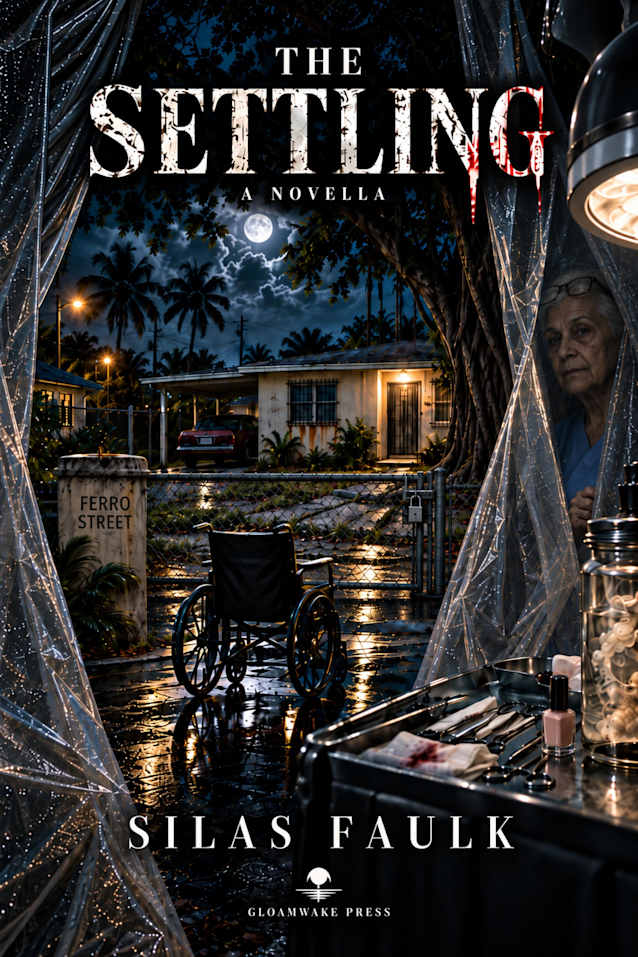
That is how Ren finds Ivette Ancarra: seventy years old, five-foot-one, warm as a kitchen in December. Ancarra works out of hotel rooms and a tidy 1960s ranch house on Ferro Street, injecting industrial silicone into the hips and thighs of women the licensed world priced out. Her patients love her. She learns their birthdays. She keeps their photographs in a notebook by the sink.
And when the product does what product does — when it migrates, hardens, goes looking for room — Ancarra takes her girls home to Ferro Street to heal. Into the recovery ward at the end of the forty-foot hall. Past the door with the hasp on it.
No one leaves Ferro Street. Not because of locks — Ancarra doesn’t need locks. She has your chart, your secrets, and the only skilled hands that can manage what she put inside you. She has your phone, carried out to the carport “to check the signal.” She has the texts she sends your family in your voice. She has the sweetest word in the language — baby — and a use for it you will not see coming.
Ren went in for her hips. What she finds in that house — the residents of the other beds, the freezer in the carport, the three-year patient in the back room, and the terrible discovery that captivity can feel exactly like being cared for — will cost her far more than $1,100 to survive.
Inside the recovery ward, Ren meets the others: Lazara, six feet of hard-won womanhood who has survived worse rooms than this one; Brisa, nineteen, a respiratory-therapy student who still believes she is a patient; Charmaine, whose seven-year-old daughter is being told, by text, that Mommy needs more rest; and the woman in the fourth bed, who no longer says anything at all. Each of them came to Ferro Street wanting what Ren wanted — to finally match the person they had always been on the inside. Faulk never mocks that wanting. The desire to change your body is not the horror here, and the women are never the punchline. The horror is the woman who monetized their wanting, and the country that left her the only door open.
THE SETTLING is extreme body horror for readers of The Slob, Woom, Tender Is the Flesh, and Eric LaRocca — a novella about the two medicines America offers its women, and what happens when the affordable one owns you. The horror here is not what Ren wanted for her body. It is what was done to it, in a house where the monster changes your dressings, holds your hand, and calls the rot spreading through you just the settling.
Reader advisory: Contains graphic medical and body horror, torture, captivity, coercive control, dismemberment, cannibalism, substance misuse, and suicide bereavement. Intended for adult readers.
From Silas Faulk, author of GROSS NEGLECT and BLUE FIRE.